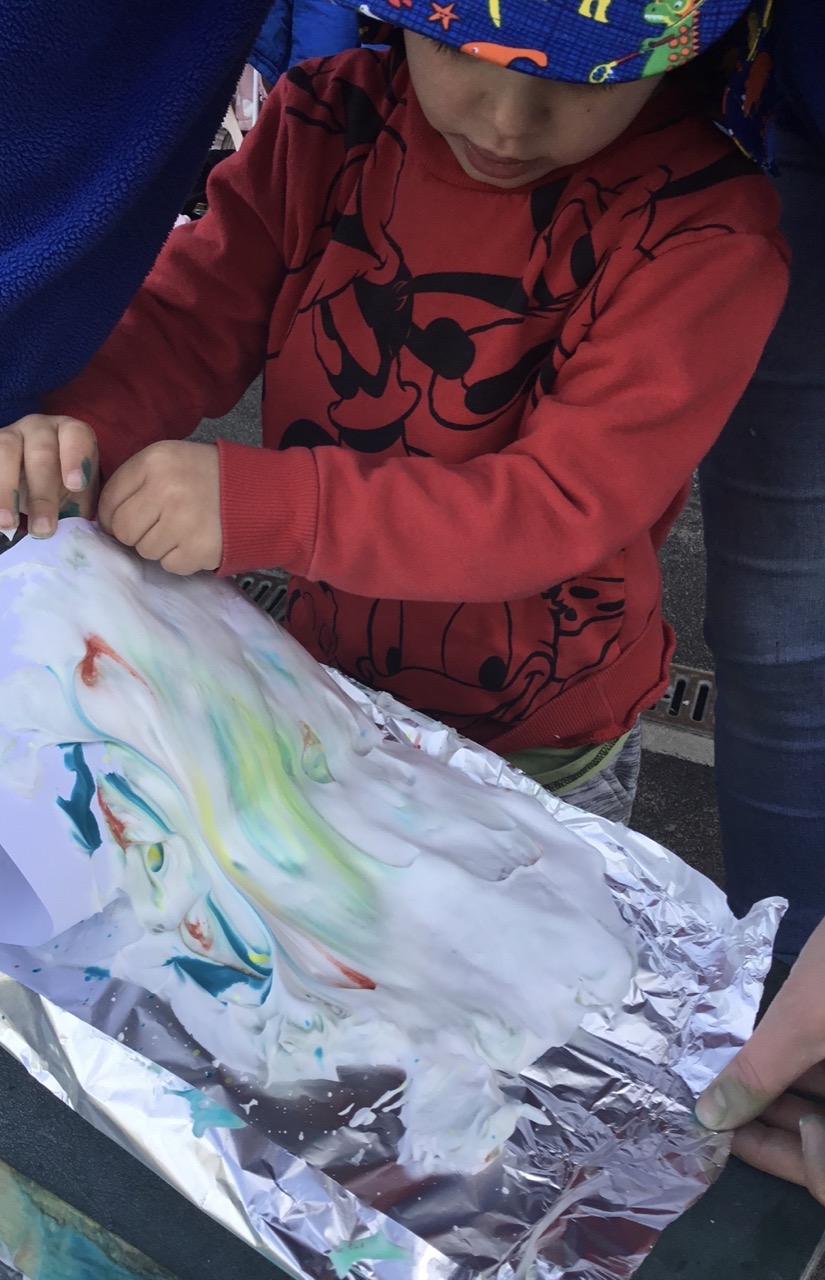
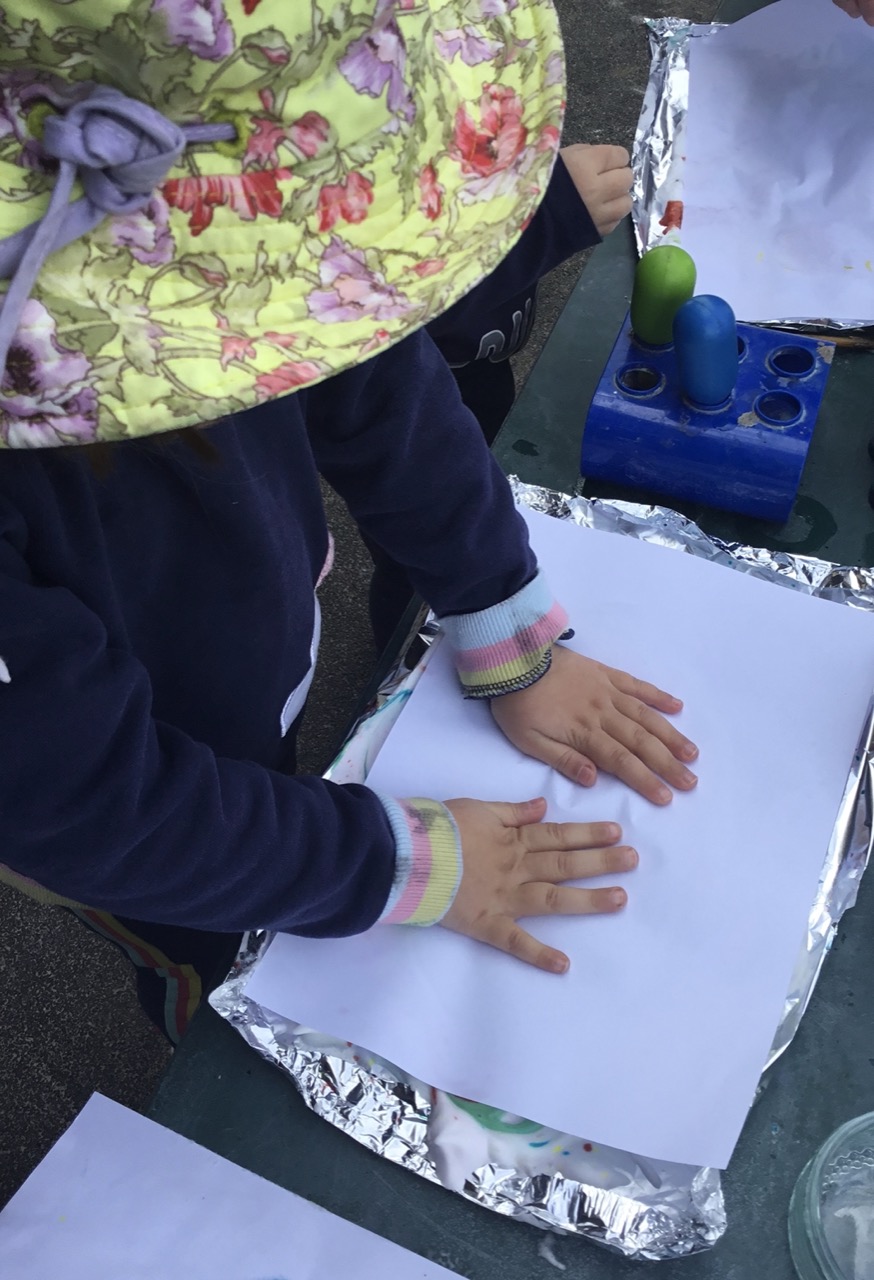
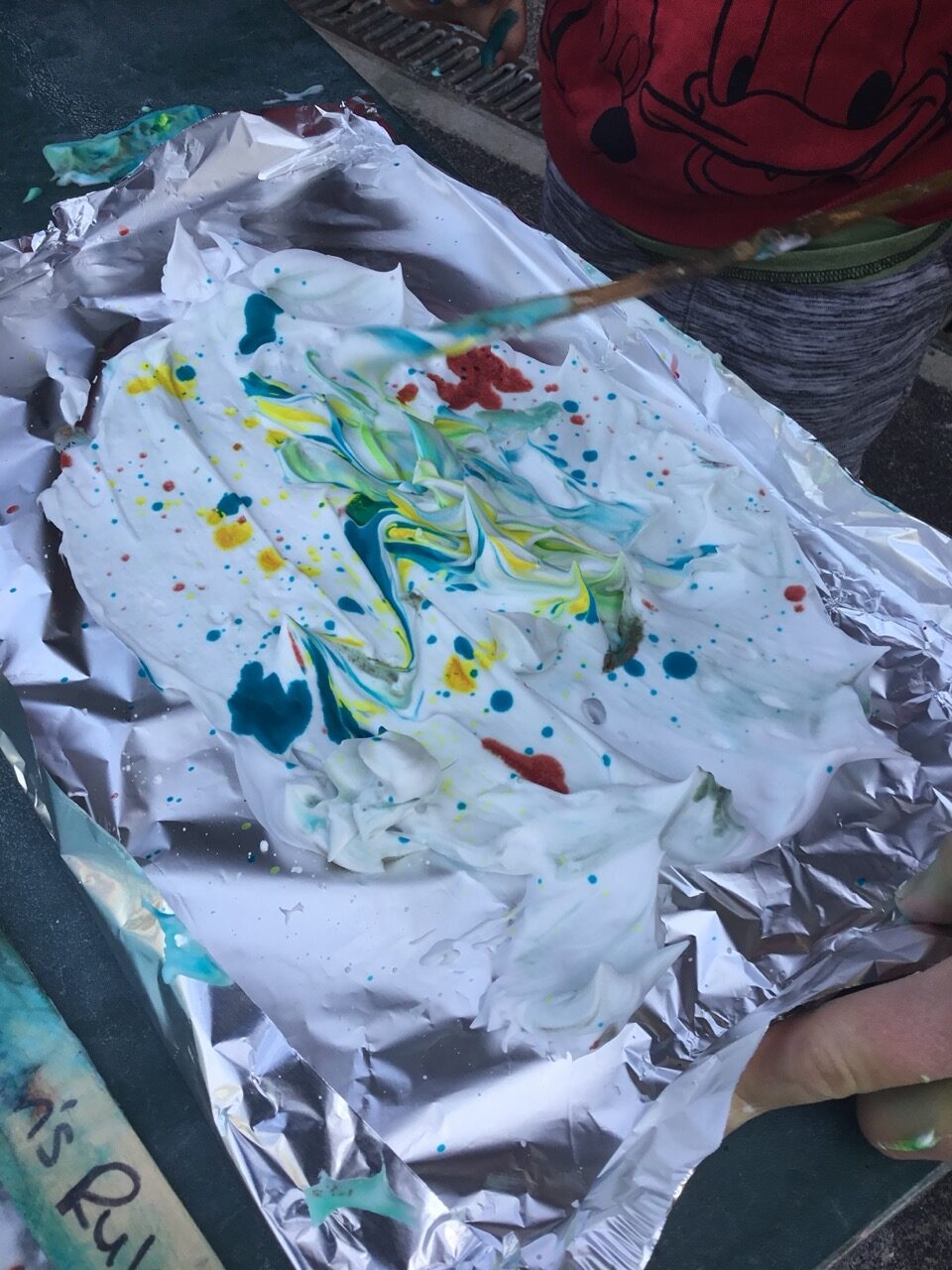
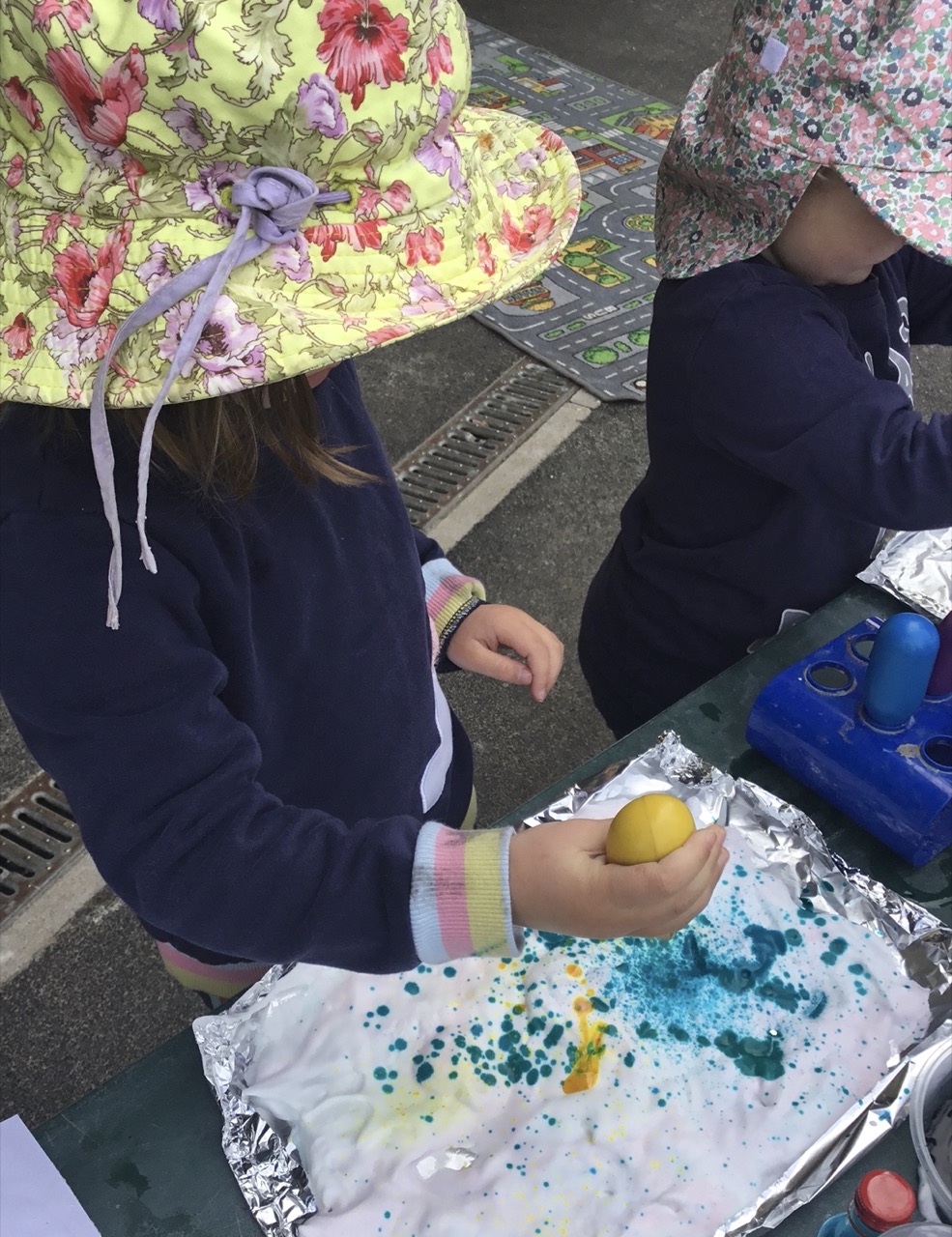
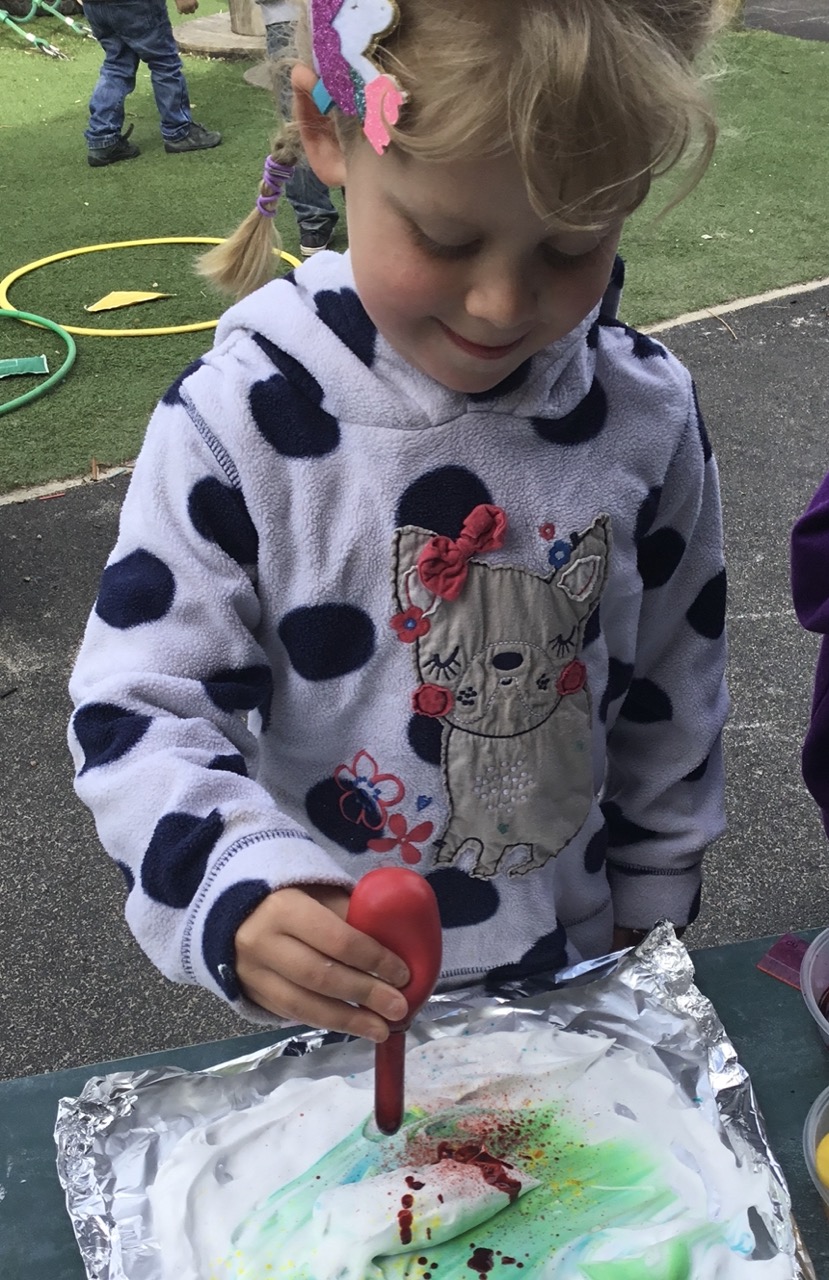
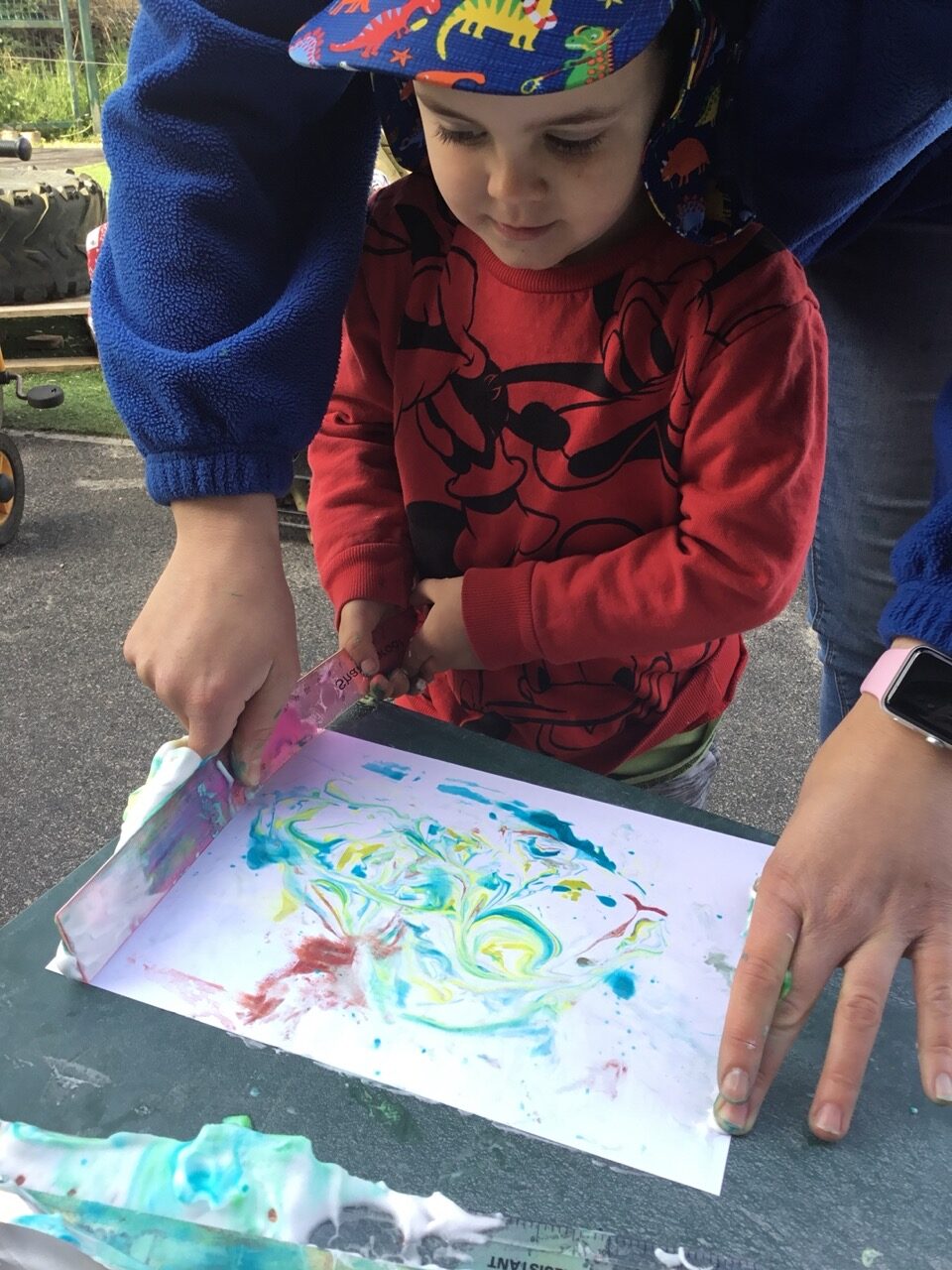
Today the nursery children have explored how to create a marbling effect with their painting.Shaving foam was added to a tray of foil, the children were invited to add different food colouring using a pipet, they learned very quickly how to suck the liquid into the tube, as it can be very tricky for little fingers. Using a stick they swirled the mixture round, (good mark making practice), until they had created the effect they wanted, paper was placed on top of the foam and pressed down firmly.Holding the foil with one hand they peeled back the paper before laying it on the table, then using a ruler, with a little guidance, they scraped the foam off leaving a beautiful colourful effect on the paper.
Well done all 🙂
Richard Heywood


Loose Parts Play
The children have been given the opportunity to explore loose parts play, both inside and especially outside.
What are loose parts?
Loose parts is the label given to any collection of natural or man-made materials that can be used to expand upon children’s play. Loose parts have no specific function or goal.Loose parts can be used in so many ways and the possibilities are as endless as is a child’s imagination.
Loose parts can cover every area of learning and development.
Personal, Social and Emotional Development – Independent play, making choices about what and how to play, sharing resources, playing alongside others.Physical Development – Fine and gross motor skills, learning how to lift and carry.Communication and Language – Speaking with other children during shared play, new language and vocabulary.Mathematics – Concepts such as shape, size, sequencing, sorting, counting, combining and measuring.Literacy – Mark making and storytelling narratives during play.Understanding the World – Using loose parts during role play; stones in the kitchen, wooden blocks as cars, testing ideas and theories.Expressive Arts and Media – Opportunity to explore media and materials, application of loose parts for creativity and art.
Here is an example of resources that can be used
Household items like cotton reels, curtain rings, blocks, beads, buttons, balls, tubes, tins, pots, springs, washers, marbles, bangles, tiles, pegs.Natural resources such as stones, sea shells, feathers, pine cones, leaves, sticks, conkers, acorns, sand.Fabrics such as scarves, ribbons, laces, scrunchies.
Why not try it at home and share on Tapestry.


Forest School Tuesday and looking after our mental health
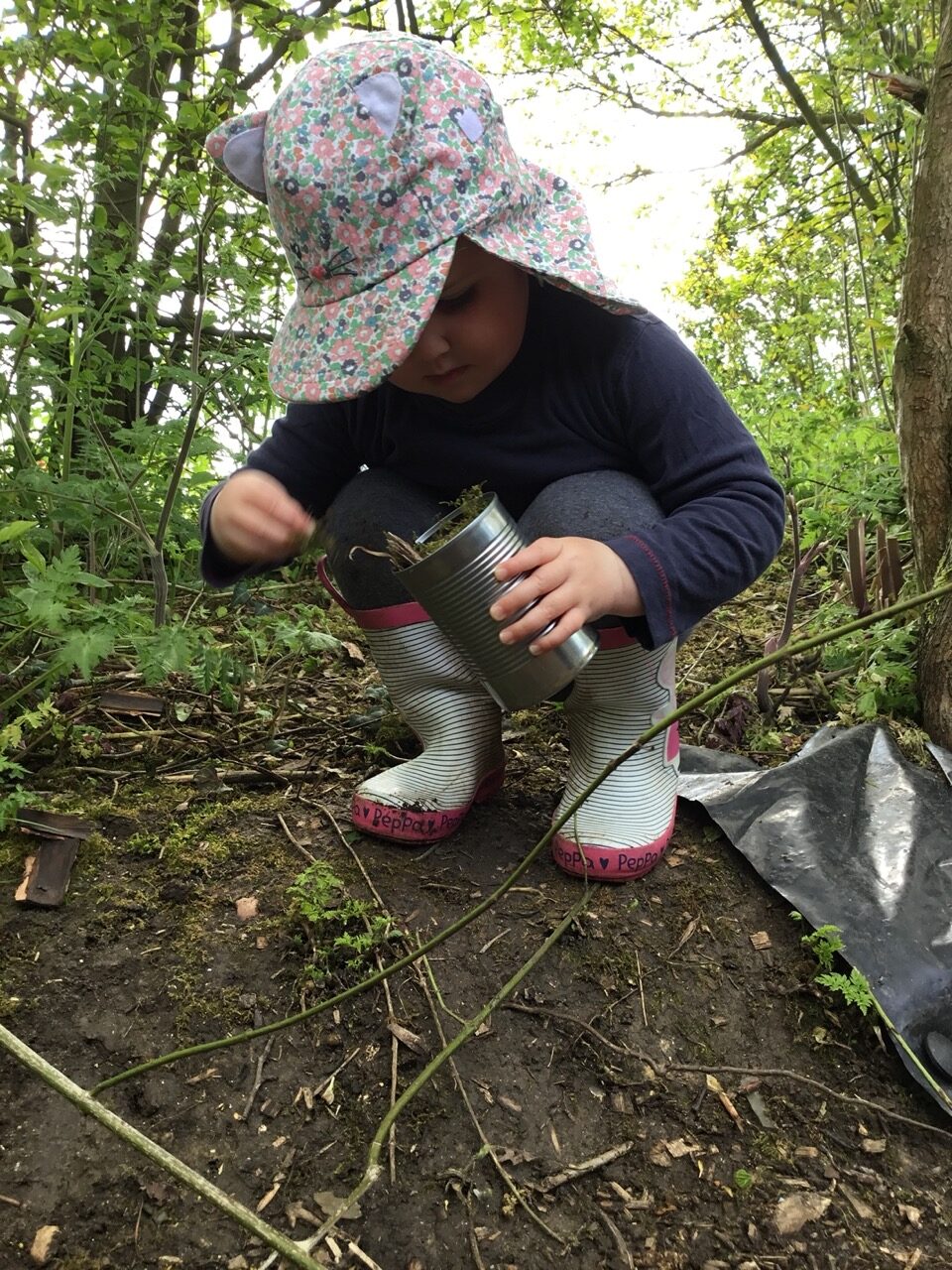
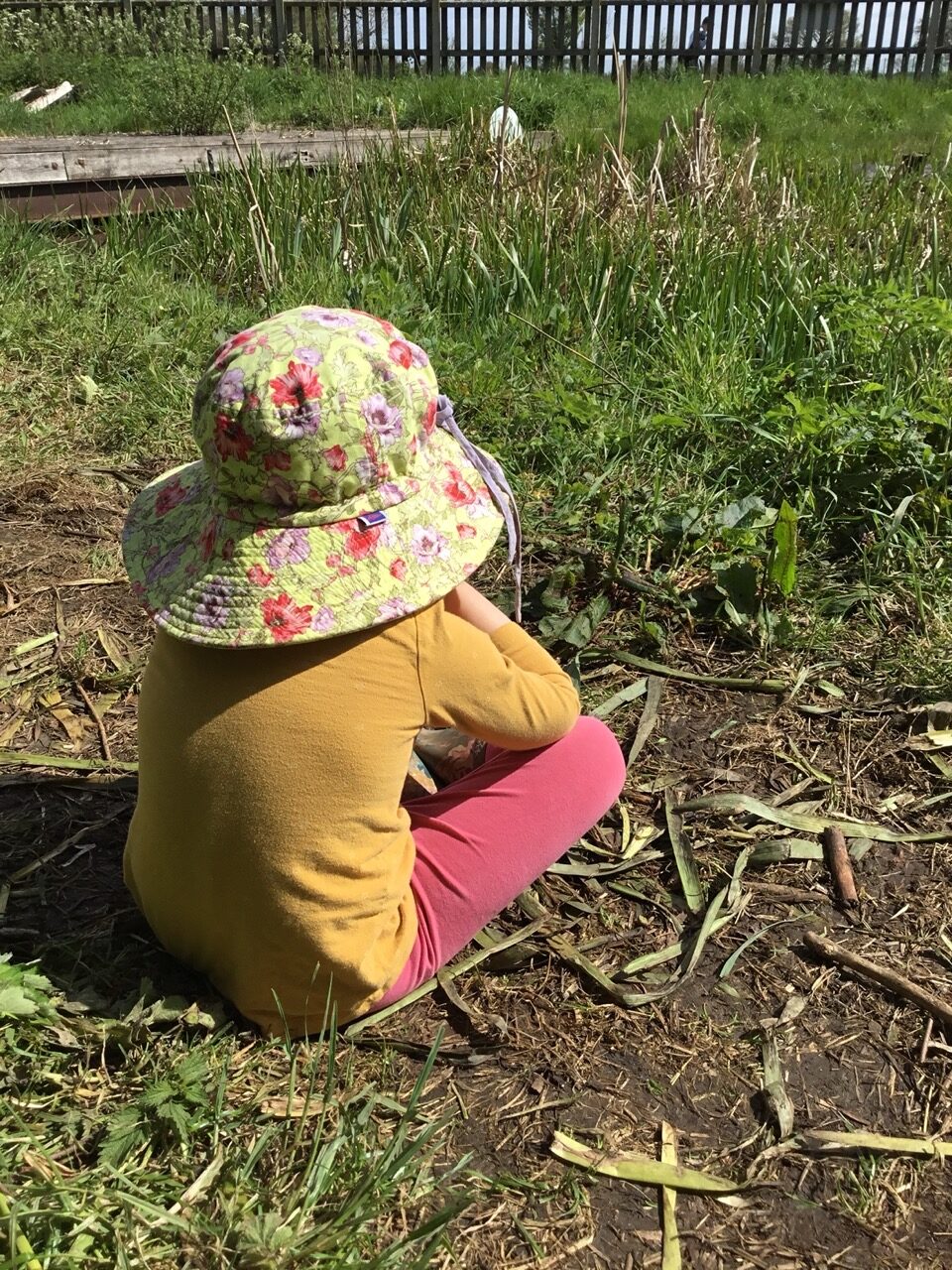
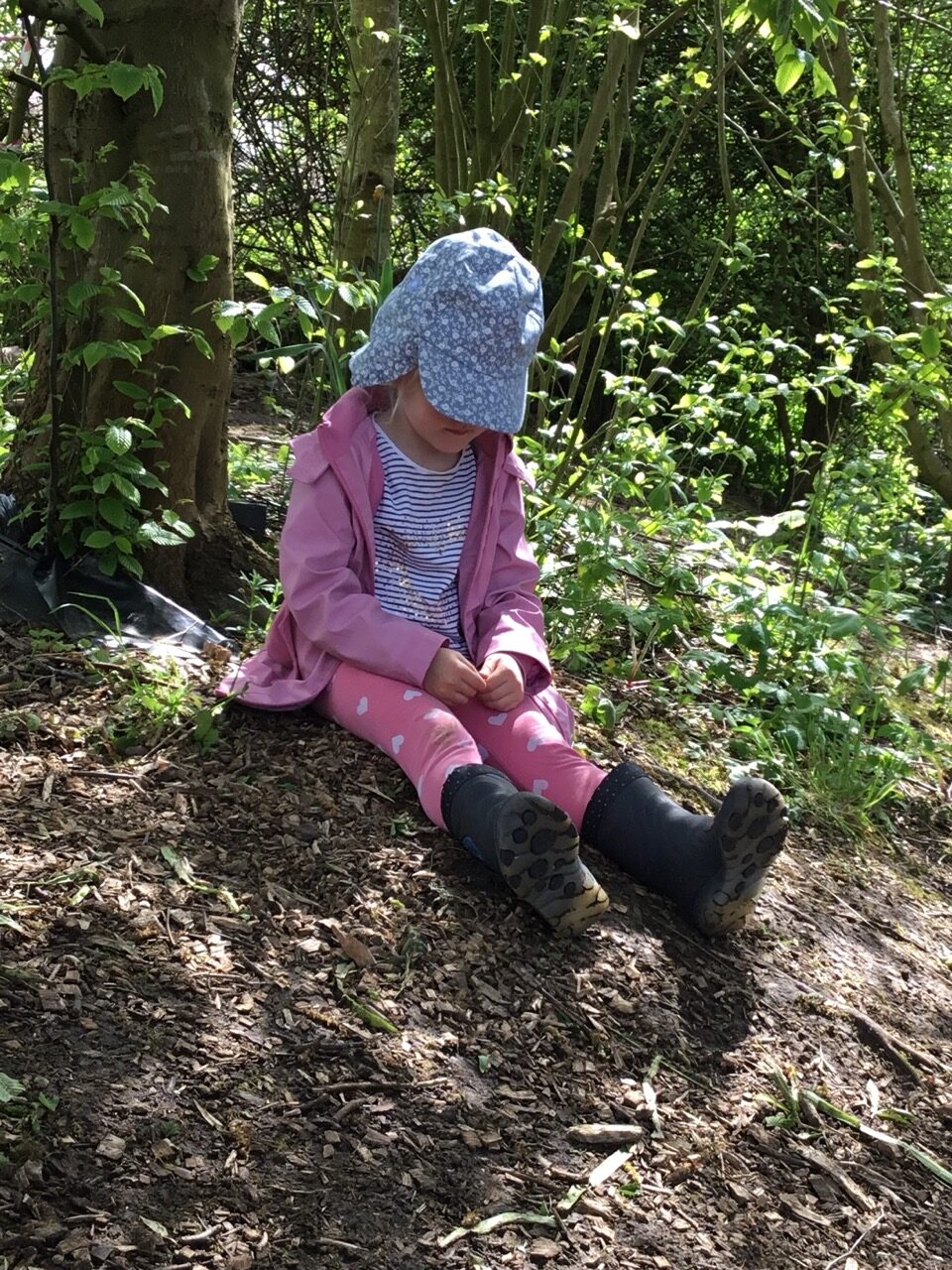
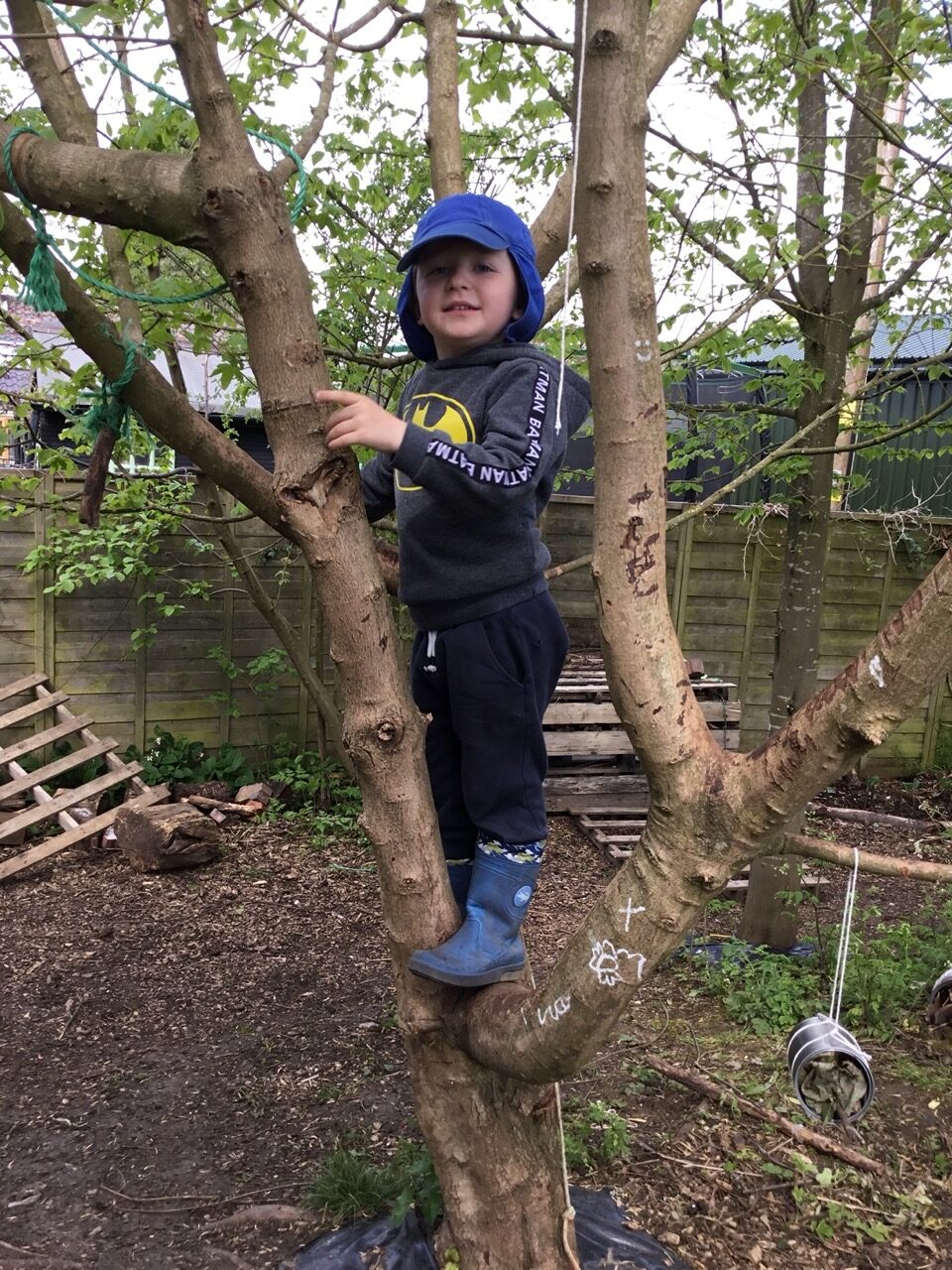
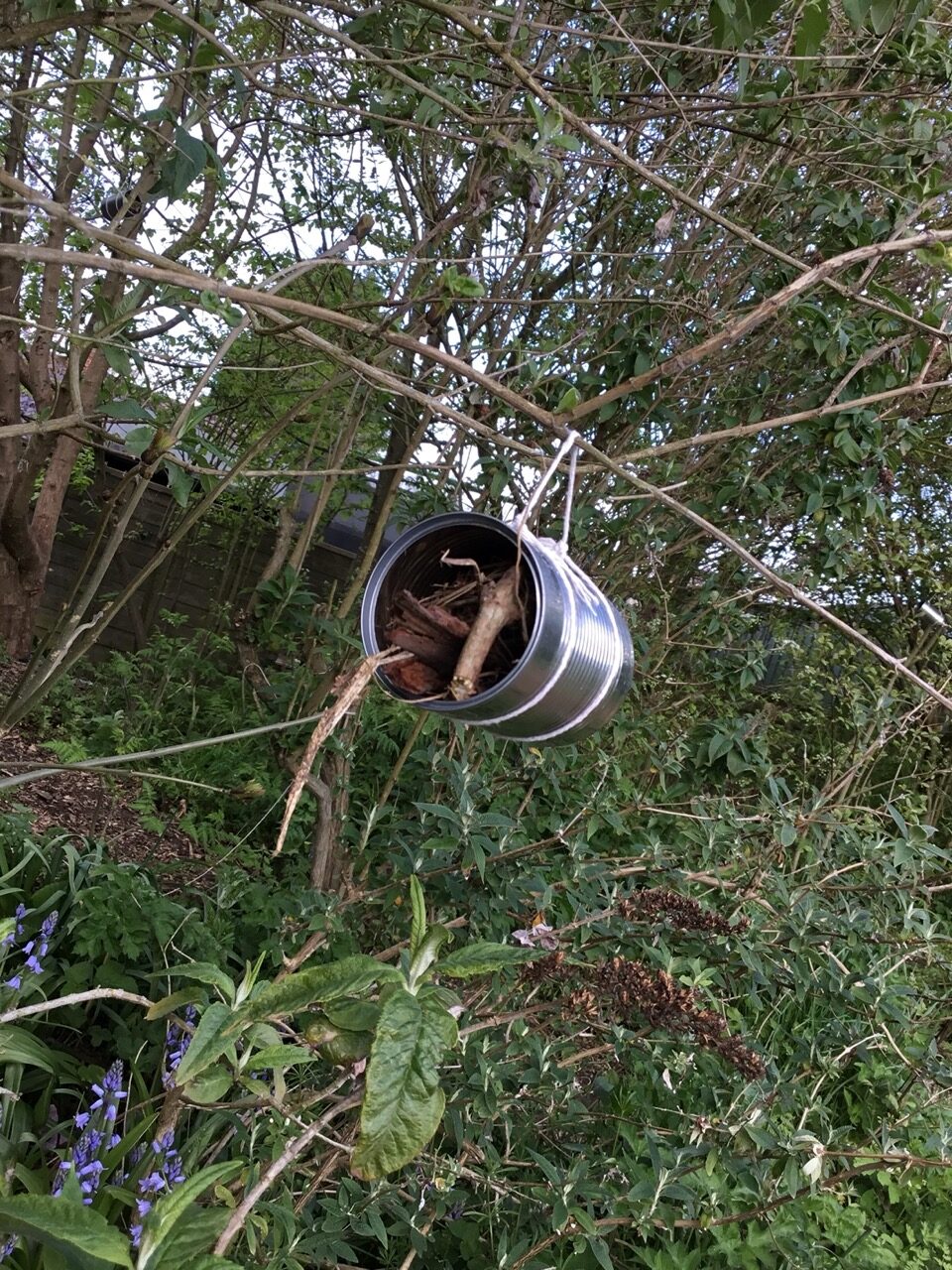
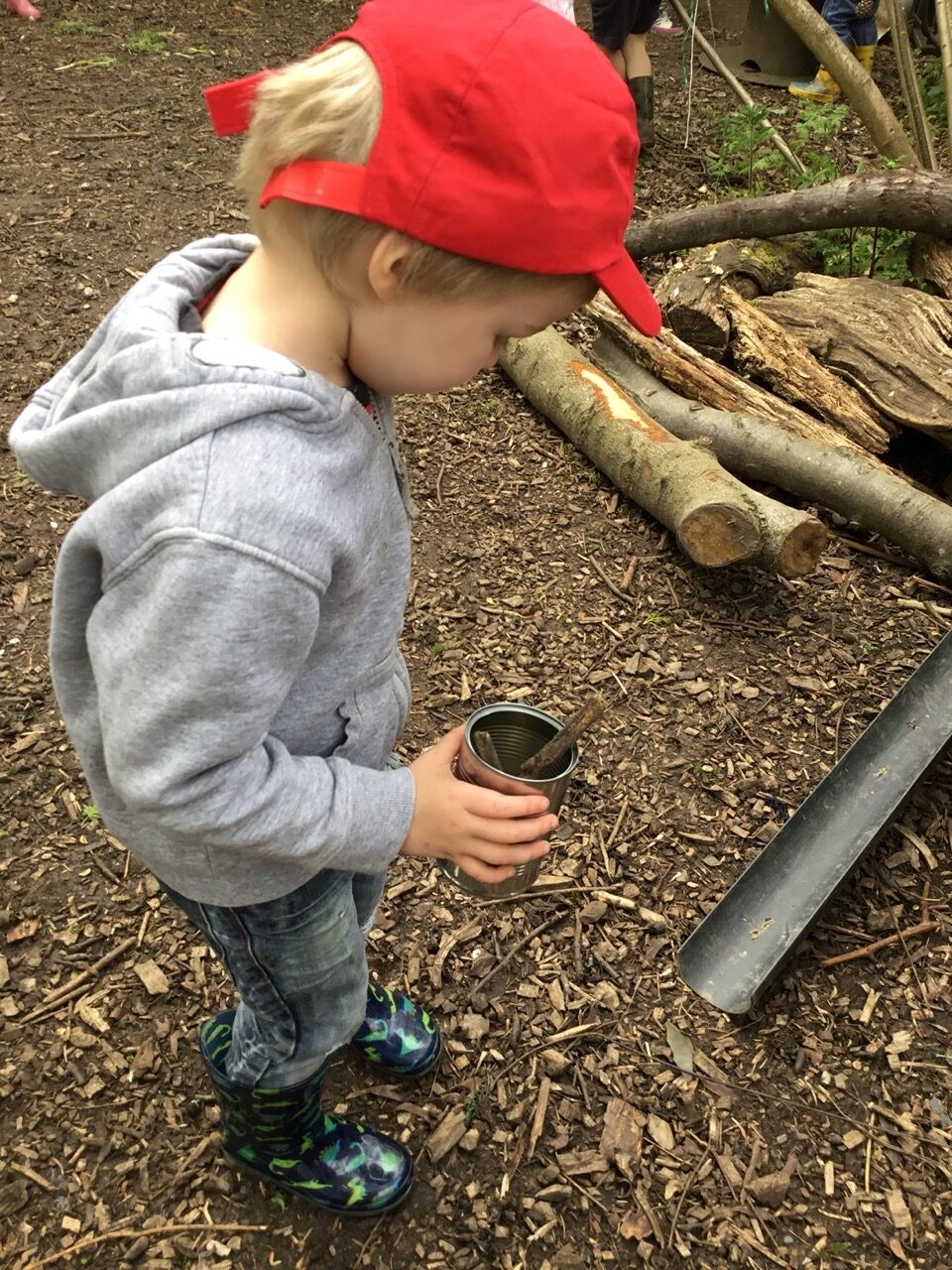
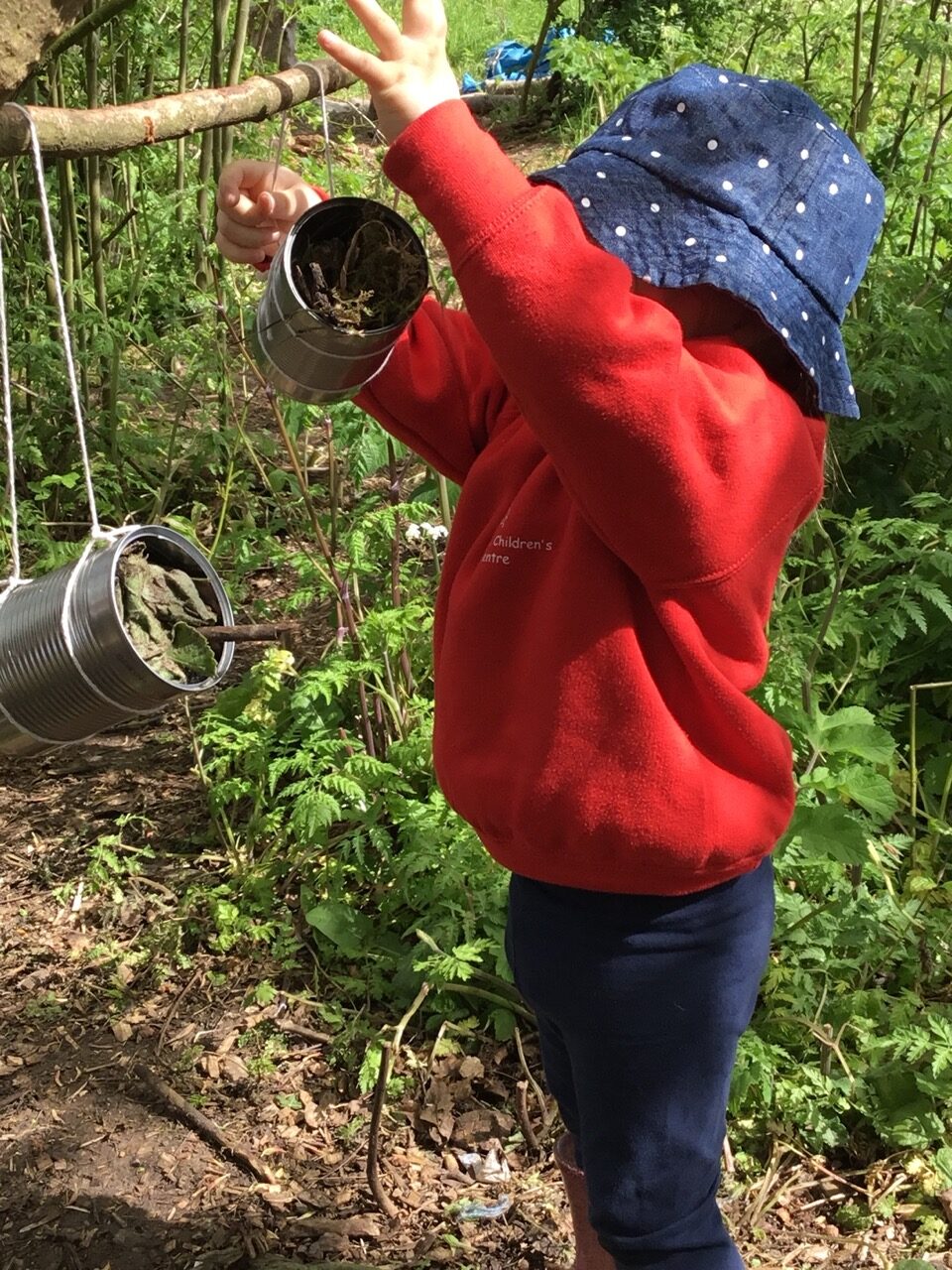
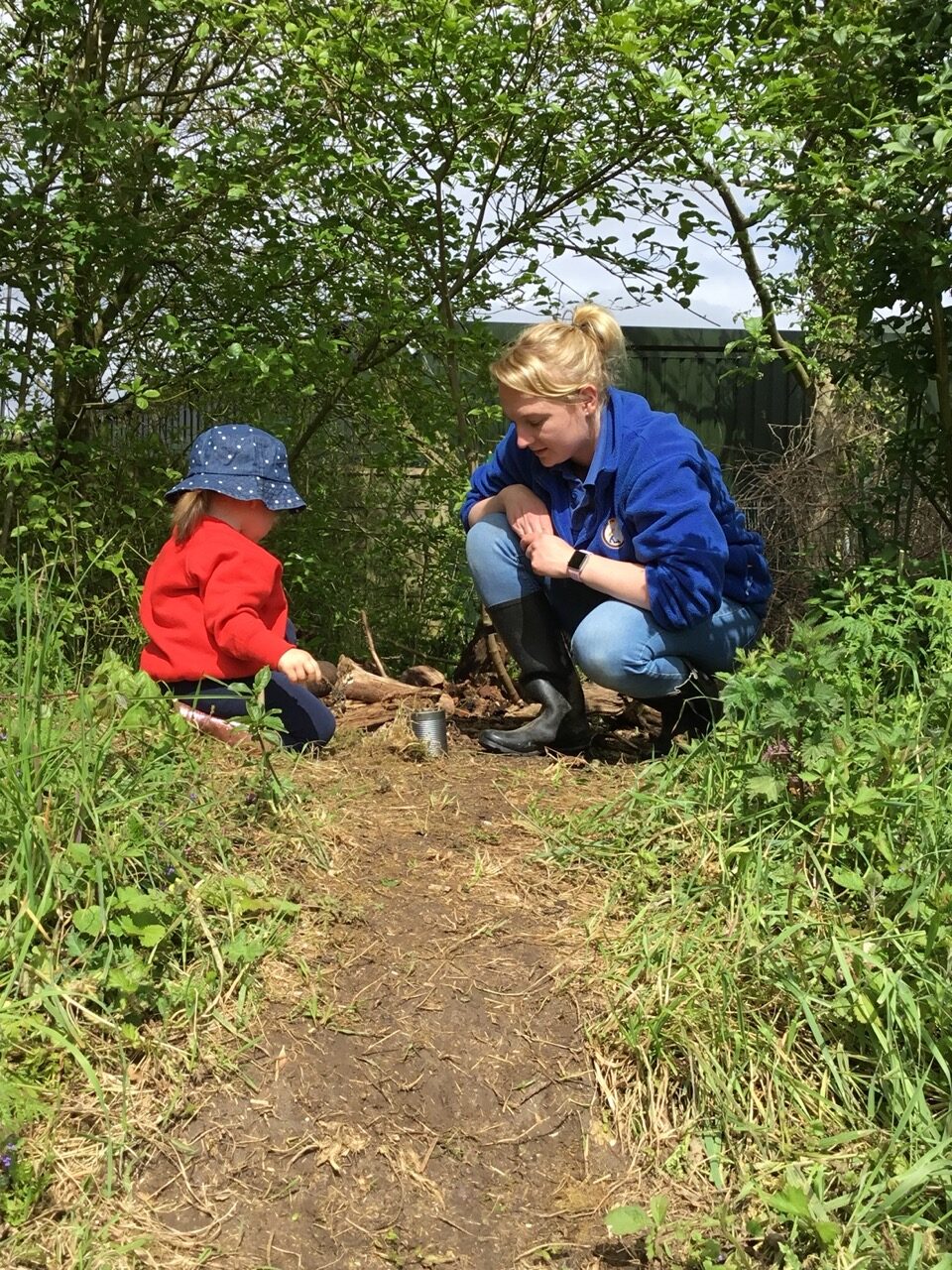
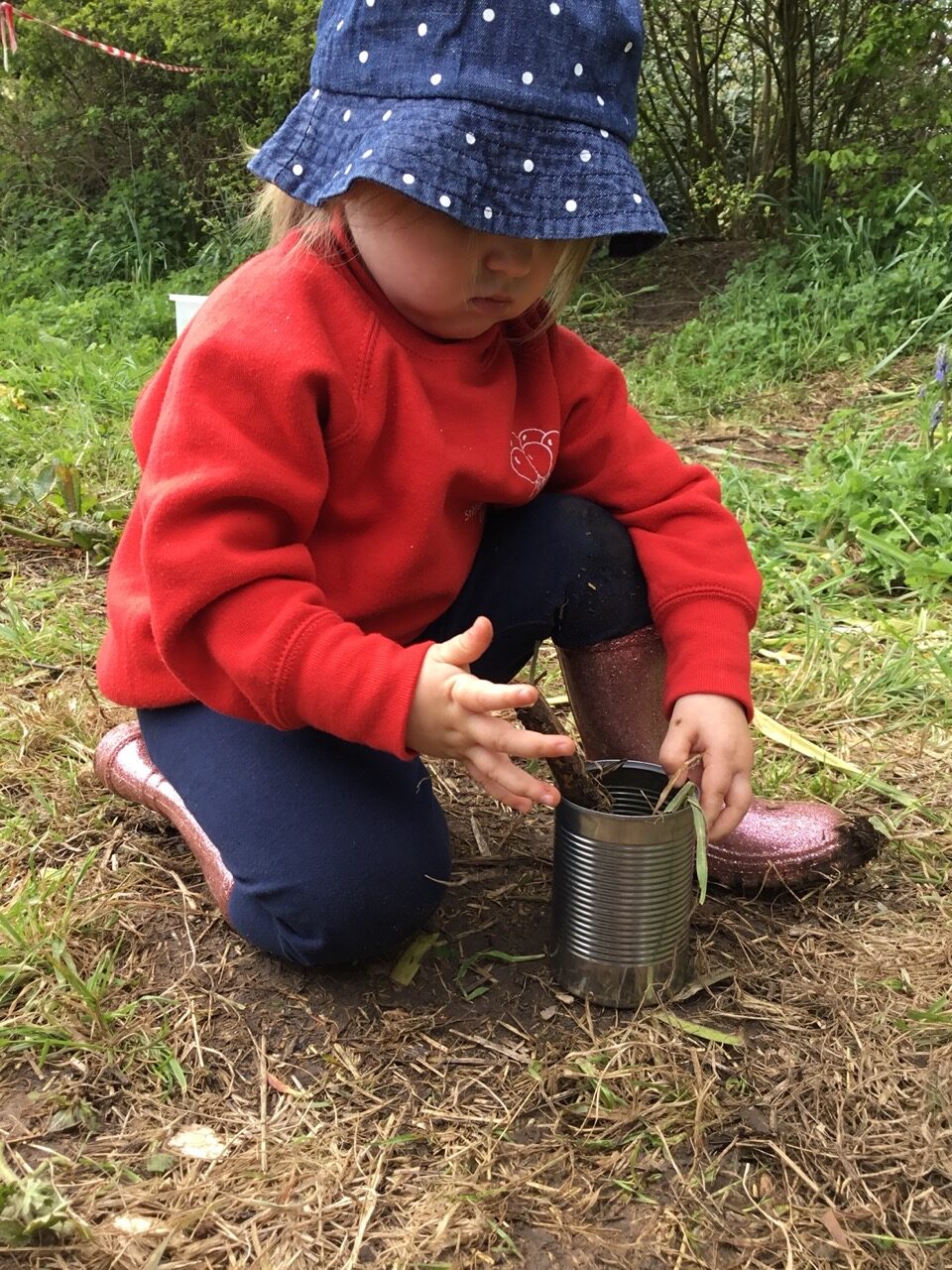
Today the nursery children visited the Forest School site. We sang our ‘Welcome song’ around the fire circle before we entered the site, then discussed the rules and how to stay safe.The children spent time making bug houses to hang in the trees, filling tins up with sticks and grass before they were hung in the trees. Others climbed trees, played in the mud kitchen and ‘with an adult’ looked for frogs in the pond, unfortunately only a shark was seen.To finish the session we had a mindful few minutes, the children chose somewhere to sit quietly by themselves, we practiced our calm breaths and listened to all the wonderful sounds in nature.At the end of the session one little girl told me ‘ I love nature and all the things in nature’
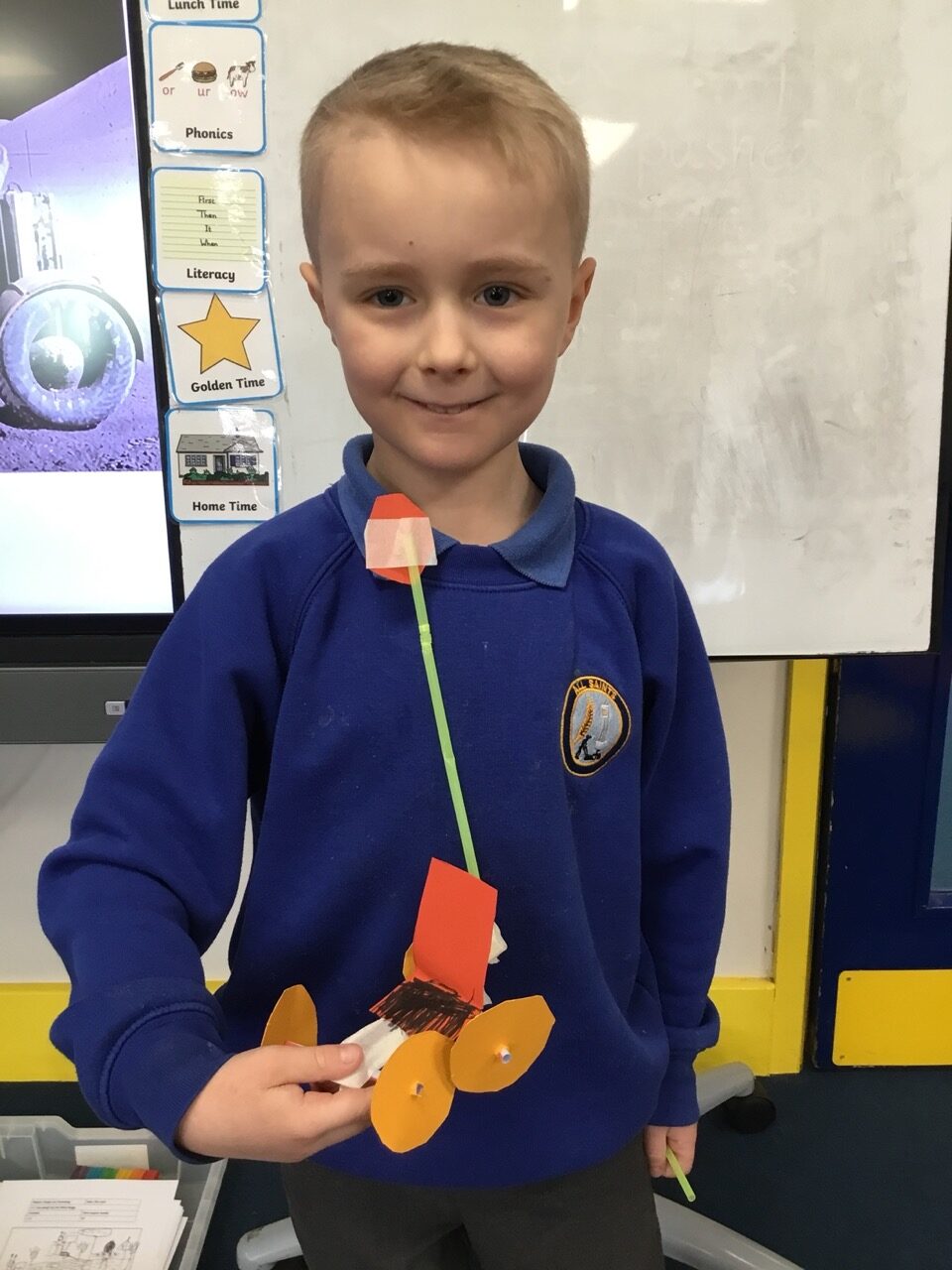
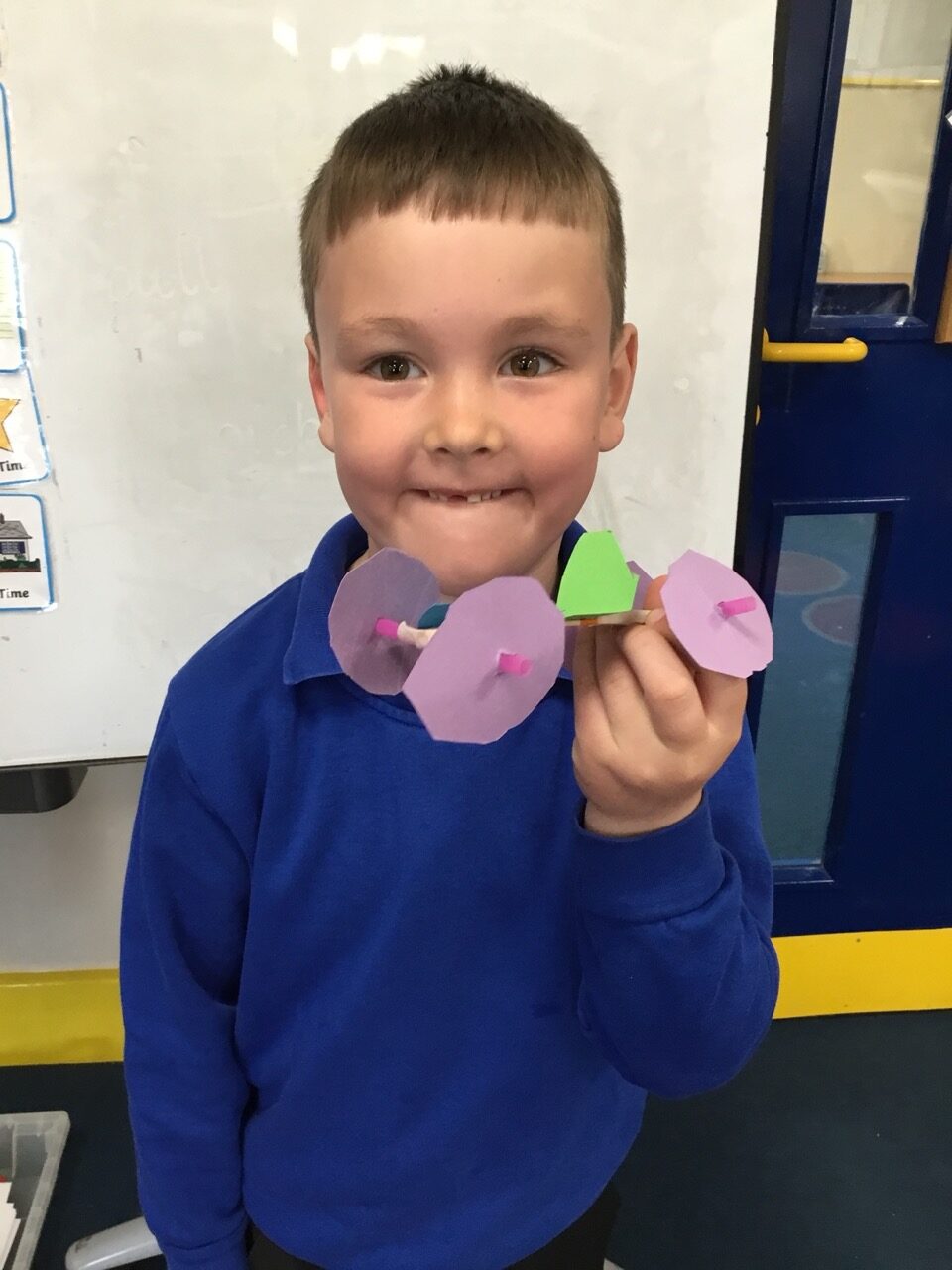
Year 1 Moon Buggies
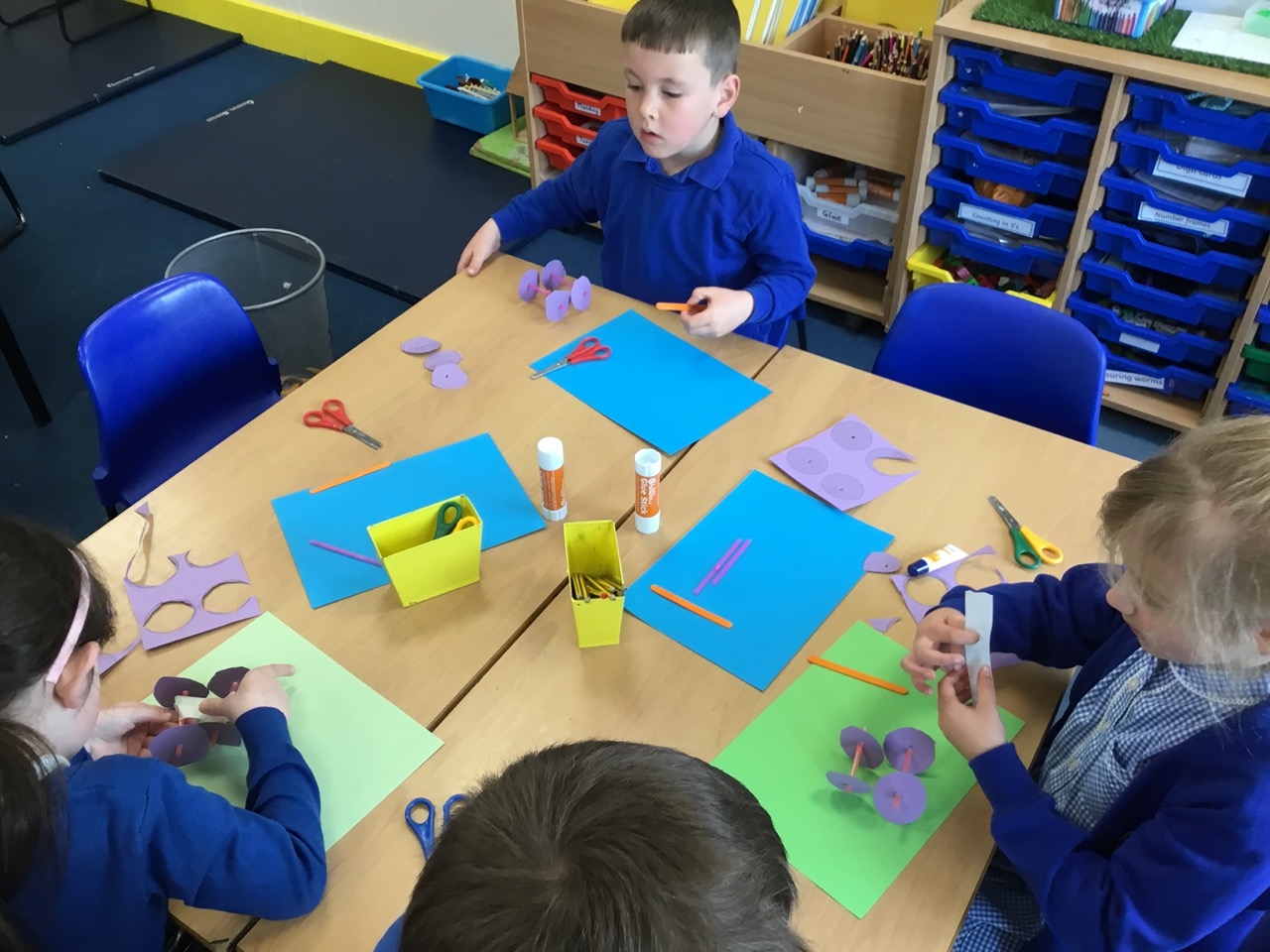
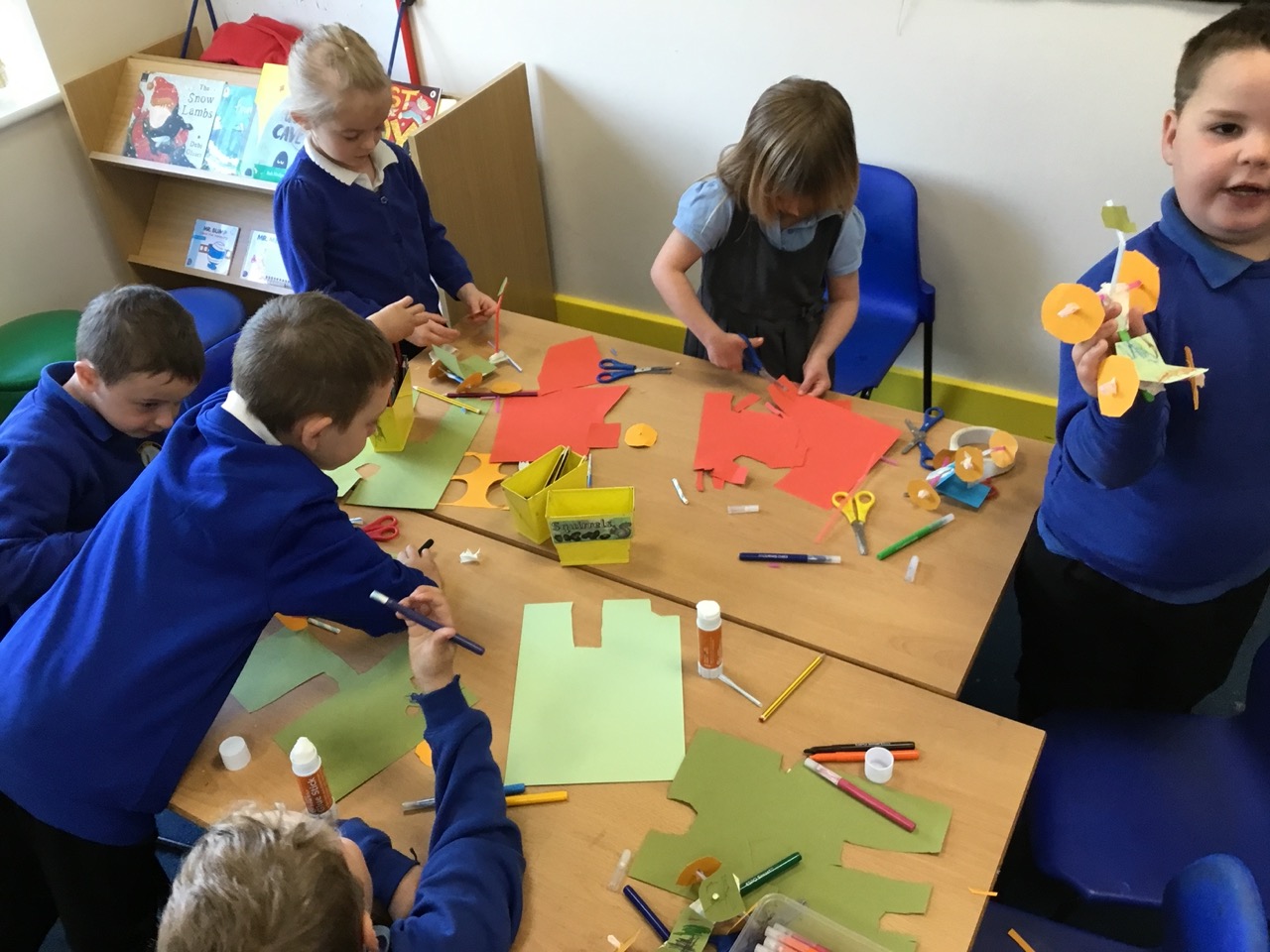
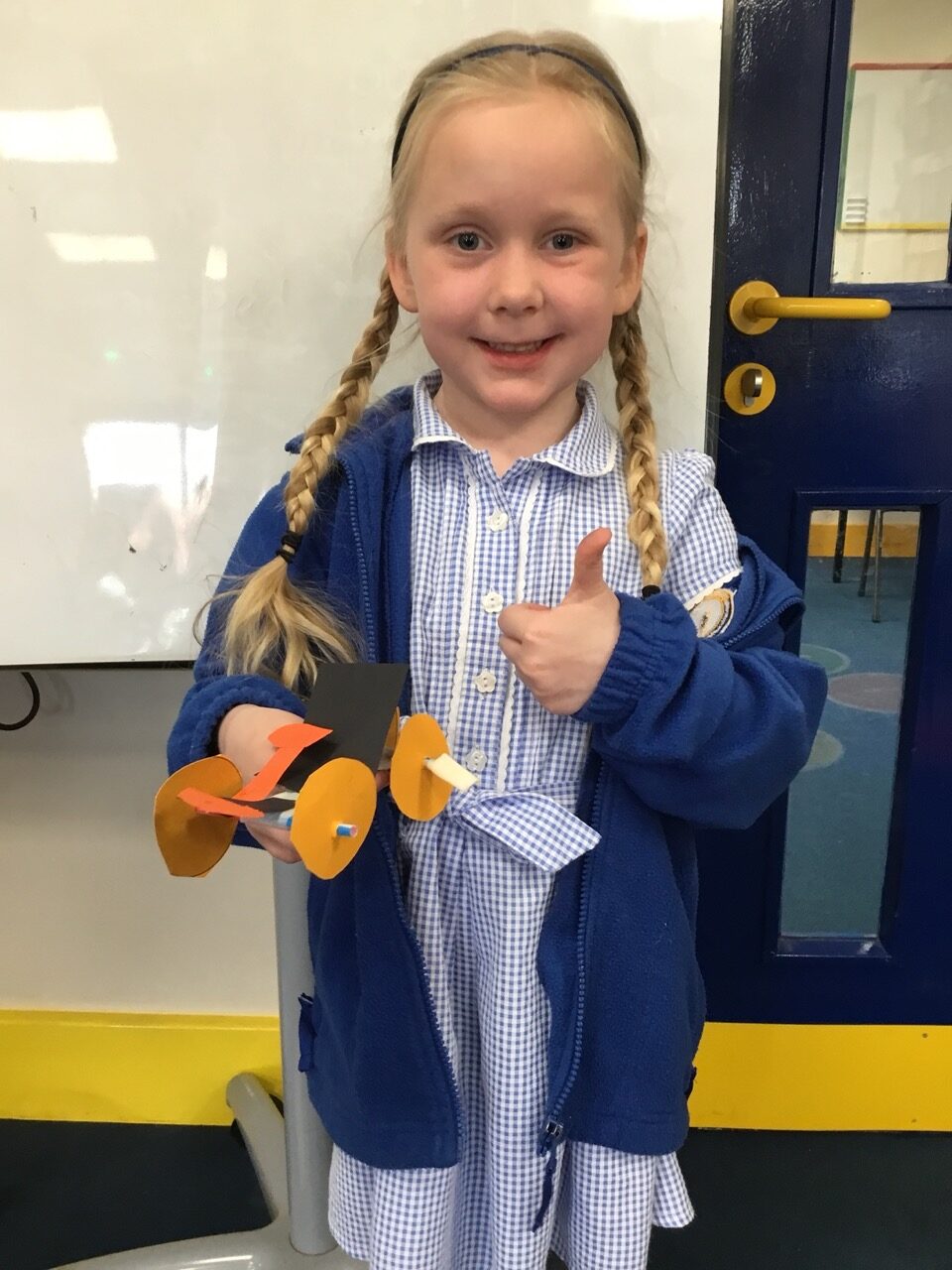
During this half term Year 1 have designed and created their own moon buggies. They have worked independently to include key feature of a moon buggy that they found in their research.
Year 1 Computing
This week, Year 1 has been learning all about algorithms. On Wednesday we went outside to practise following different instructions just like a computer would.


Year 5 have enjoyed taking part in real PE
They have been playing throw tennis and working on their key skills of controlling the ball by working on a series of skills challenges.

Year 5 – Rosa Parks
Year 5 have been looking at Rosa Parks and how her simple action of refusing to move seats brought about the bus boycott in 1955 which eventually lead to the end of segregation laws in America.

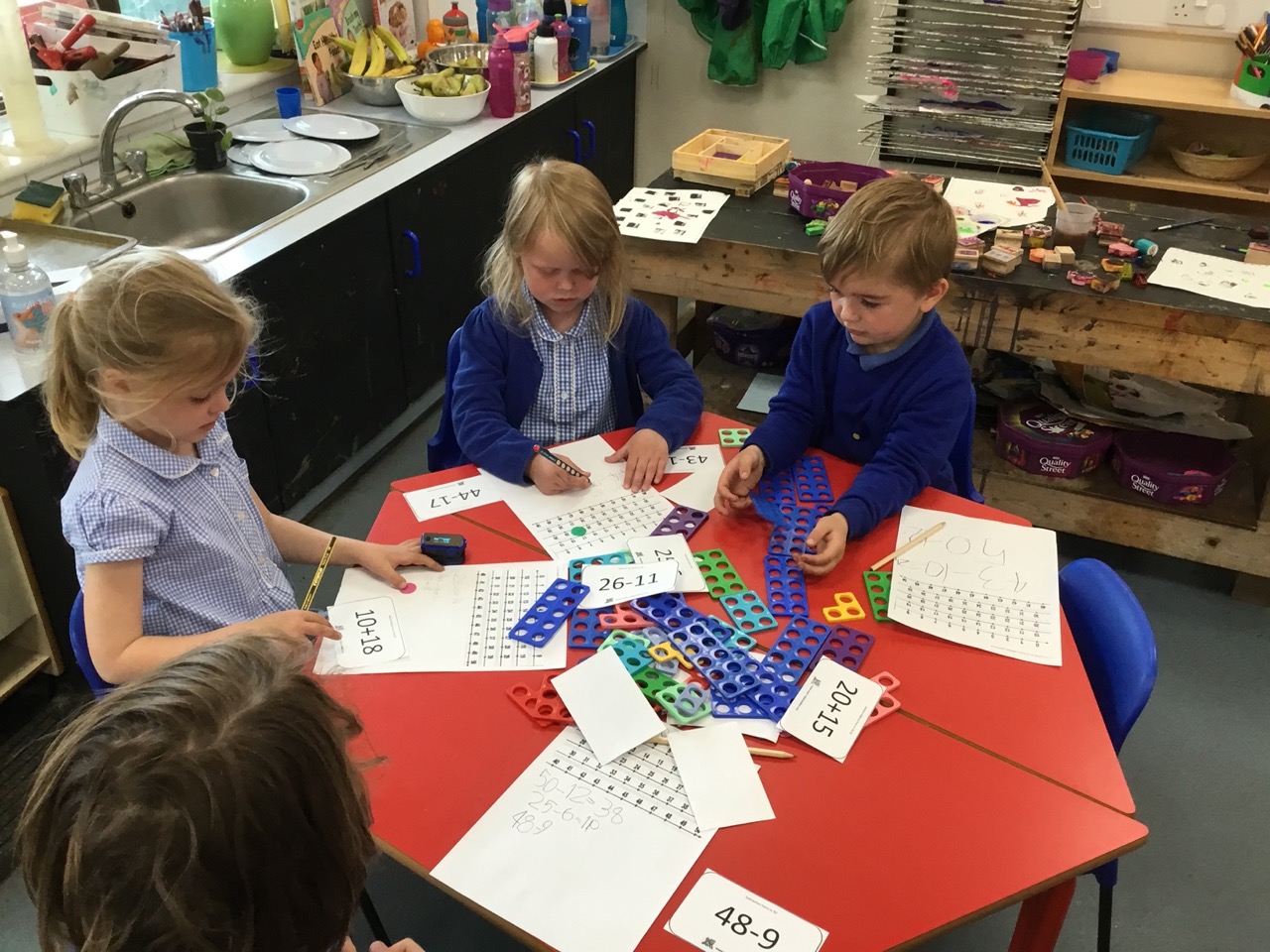
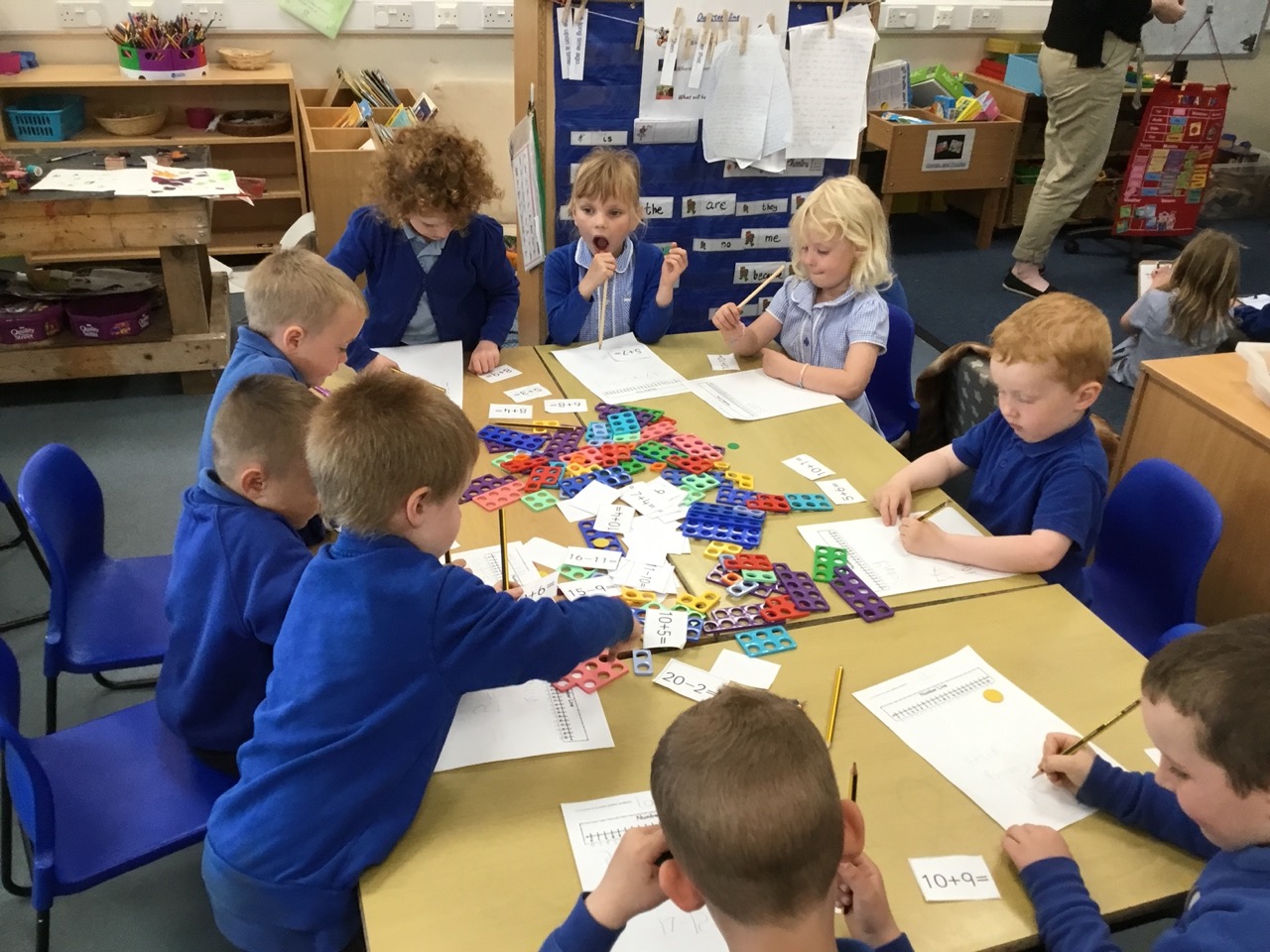
Reception Maths
Maths Choir
Independent addition and subtraction to 20 and beyond!






Year 3 – Using Resources in Maths
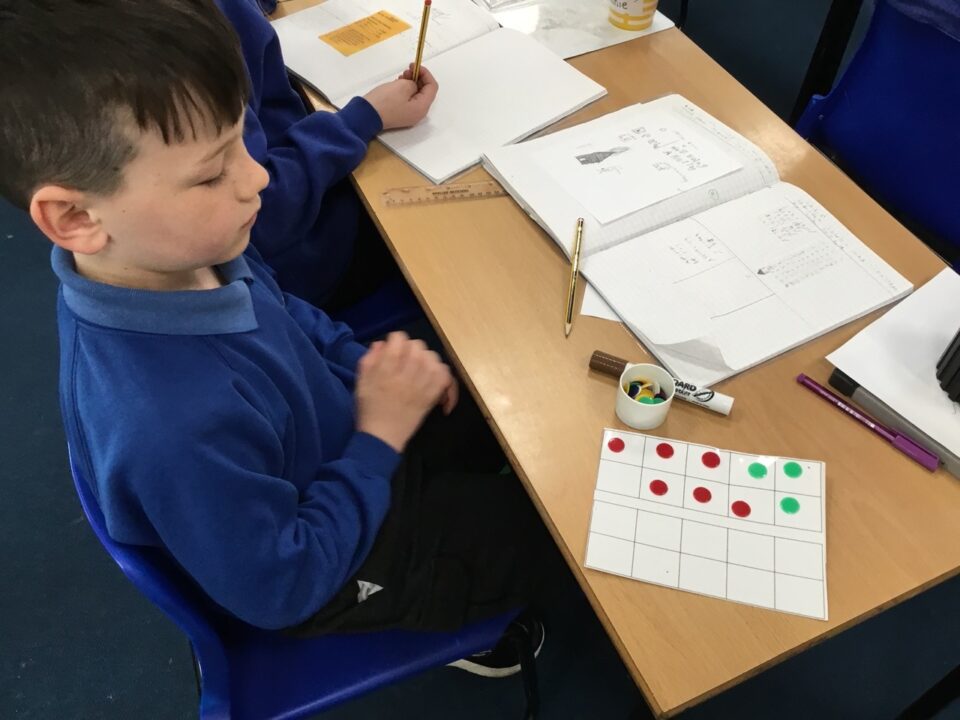
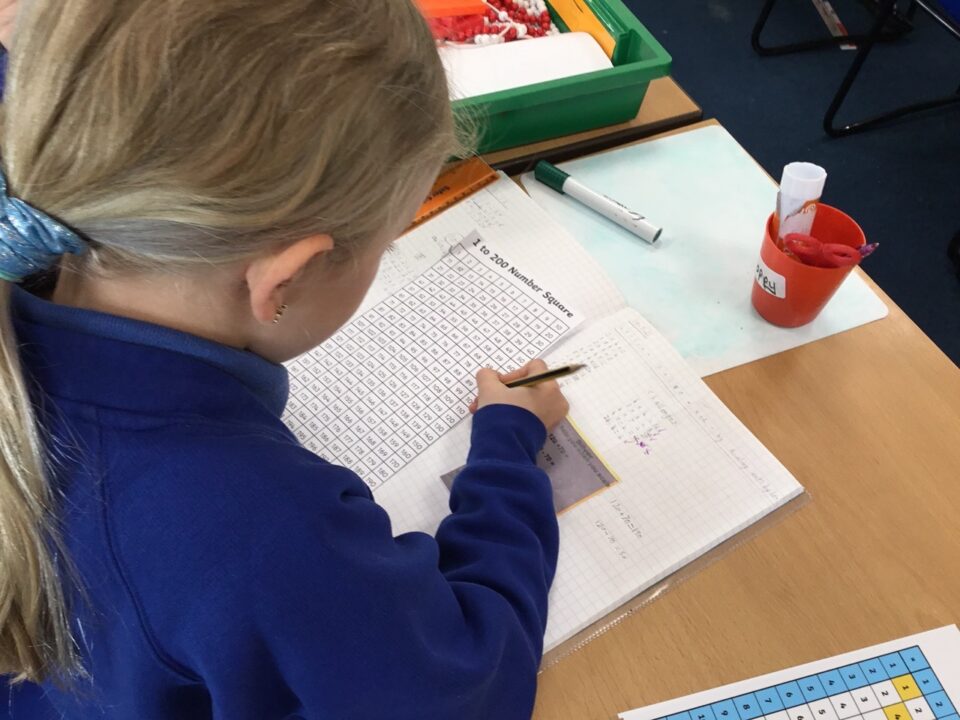
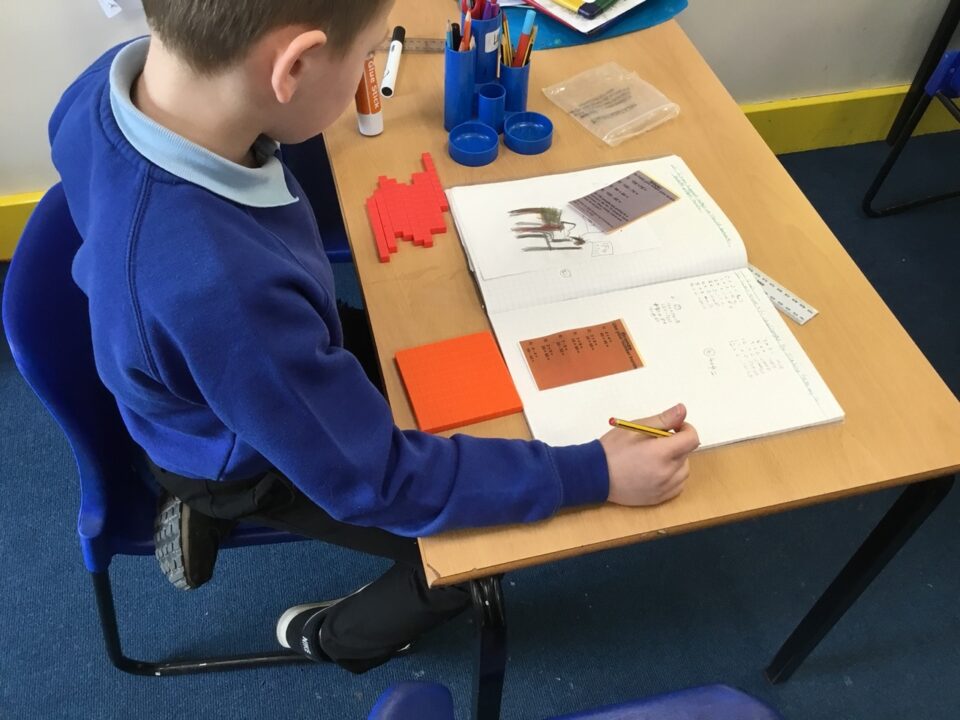
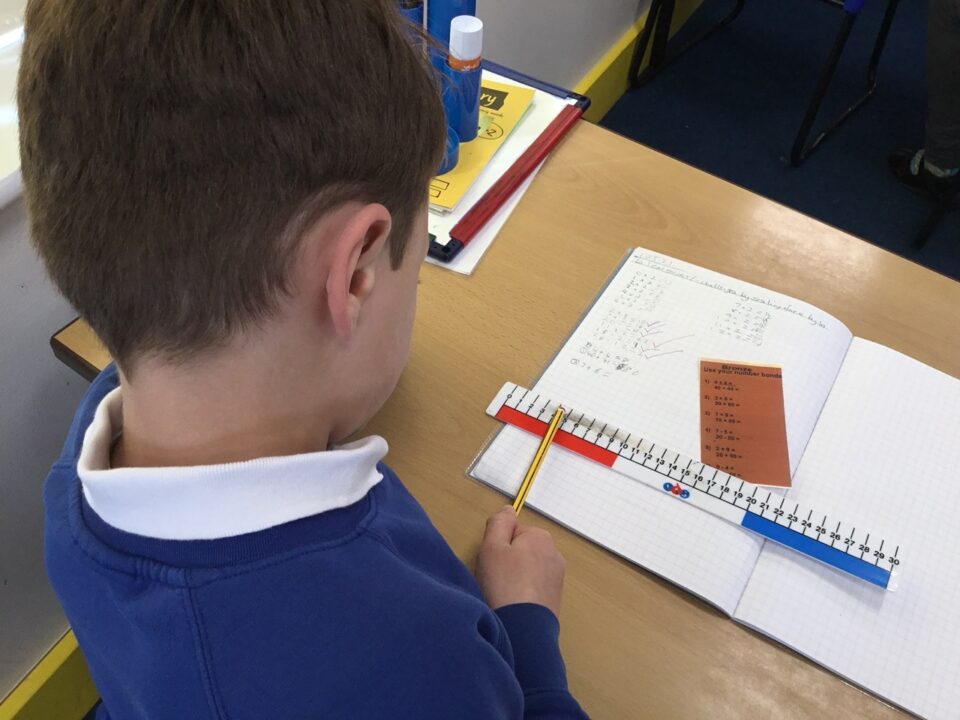
In Year 3, we are focusing on using resources to support us in all aspects of Maths. Today, the children have been adding and subtracting and then scaling these numbers up 10 times. Eg: if we know that 5+7=12 then we can work out that 50 + 70=120. The children enjoyed sharing that the numbers are ten times bigger.


Year 4 Team Work
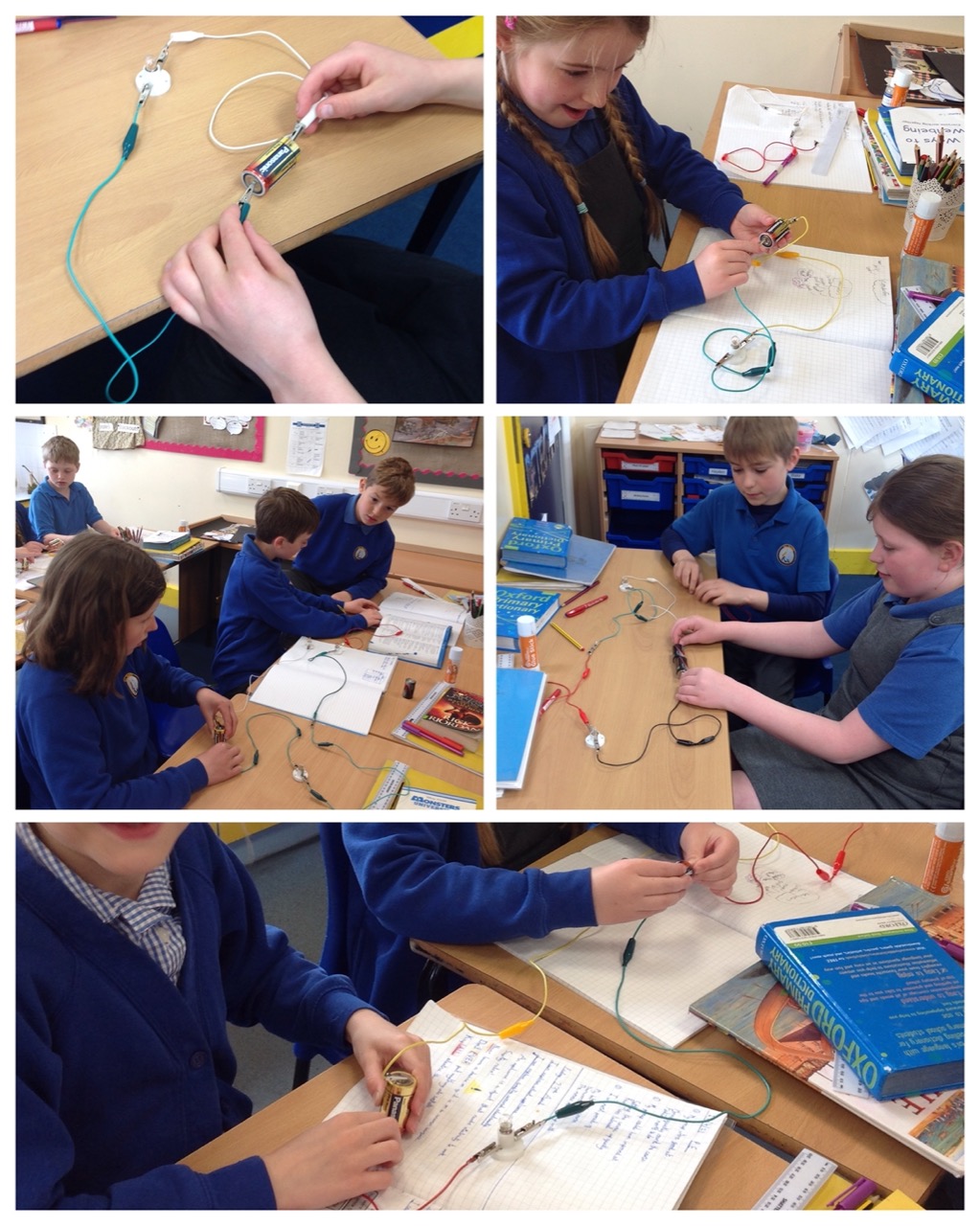
Year 4 have been working at team work this week. In PE we thought about working together, we decided to work with classmates we wouldn’t normally partner. It was a great success where children improved their coordination skills. In science we recalled how to make an electrical circuit before we venture on to experimenting with conductors and insulators next week.
This afternoon the children really excelled themselves in their music lesson. They sang well and kept a good rhythm and steady beat as they rehearsed their contribution for a musical experience in July called The Carnival Suite. The listened attentively and worked hard at making progress with their playing.
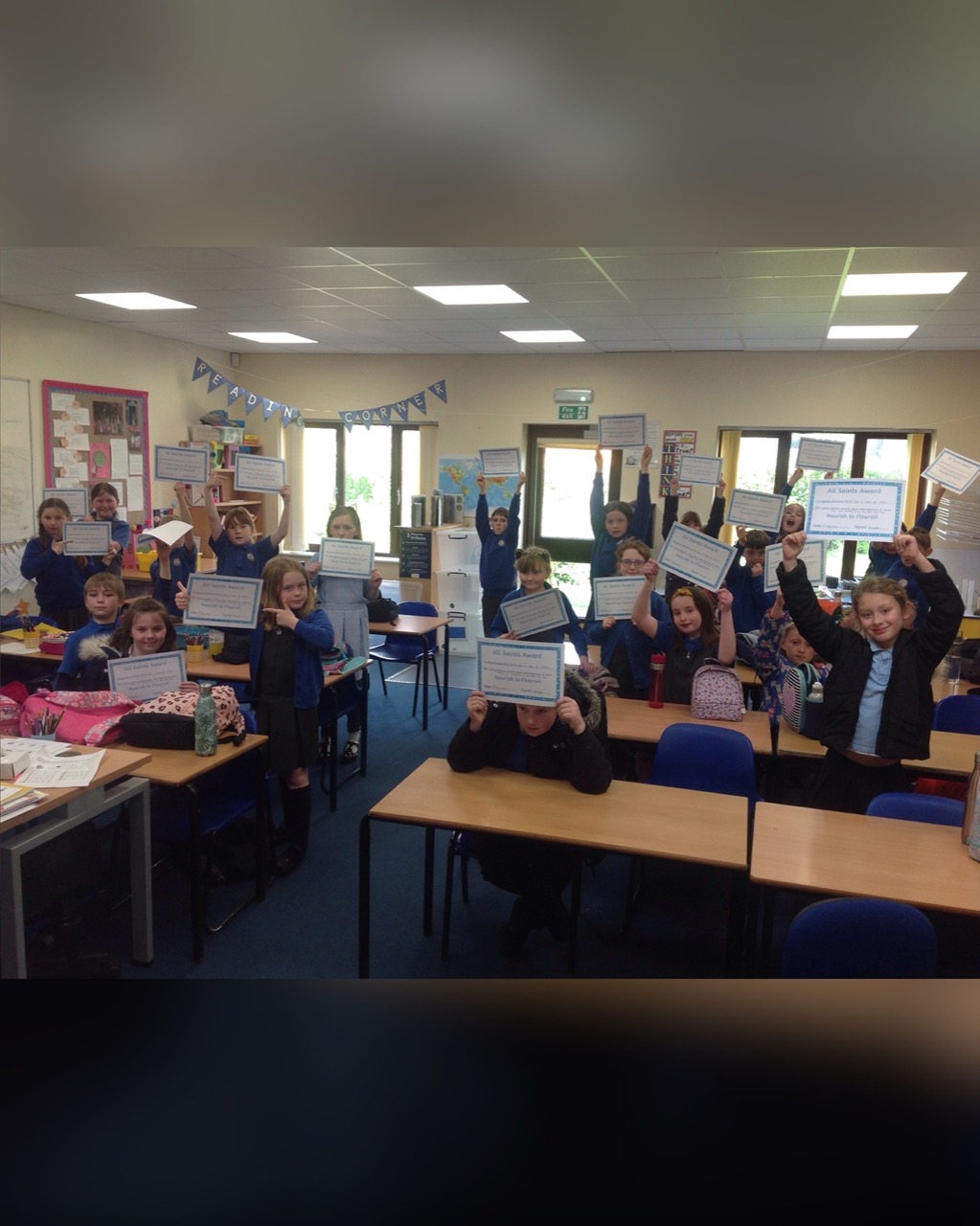
To top the day off everyone received the class certificate! Well done Year 4, Mrs Budgett is so proud of you and your work attitude today plus your desire to work cooperatively.